

While consolidation has been recognised as inevitable, nine out of ten LGPS practitioners think current deadlines are unrealistic, the latest LGPS Investment Survey produced by Room151 and Schroders reveals
Change was the dominant theme in this year’s LGPS Investment Survey, as practitioners up and down the country grappled with a new reality of consolidating from eight to six pools. But change was also afoot in strategic asset allocation considerations, with practitioners digesting the findings of their triennial valuation and growing more cautious about private market assets.
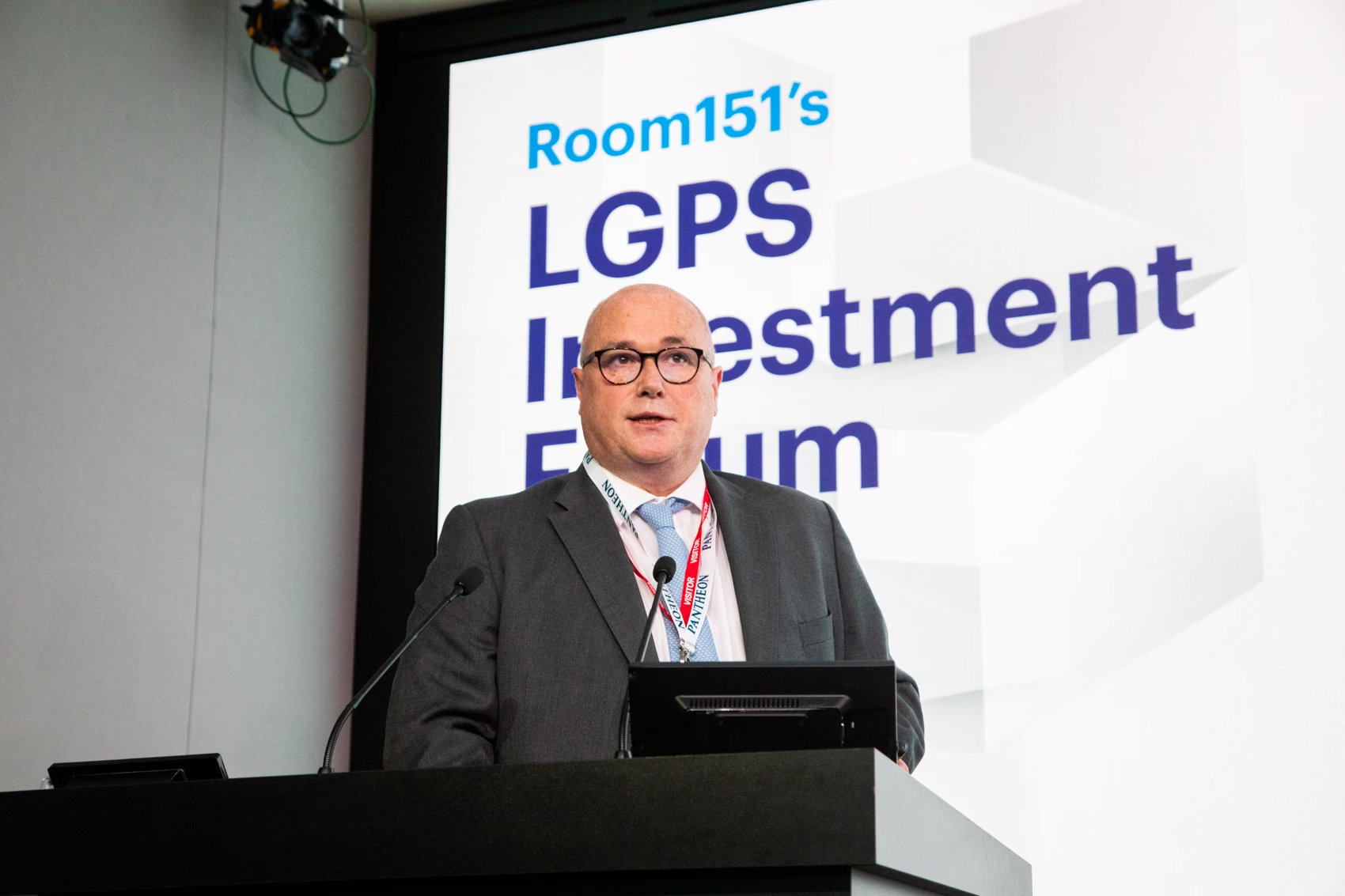
Presenting the findings at Room151’s annual Investment Forum in London, Paul Myles, head of LGPS at Schroders, expressed his gratitude to the funds that had taken part in the survey amid an unusually busy time for the LGPS. “The survey results show clearly that opposition to mandation continues: roughly two-thirds continue to oppose government-directed investments.”
Now in its third year, the survey shows that the push for consolidation has become more widely accepted as inevitable, with more than half of respondents indicating that they agreed with the general direction of travel. However, only 11% of respondents expressed optimism that the March 2026 pooling deadline could be met. “Only 16% of survey respondents think no further consolidation will take place.”
Despite the pensions minister’s reassurances last month, more than a third of respondents believe further pool consolidation could be on the cards, and nearly half believe there are likely to be fewer funds going forward.
Changing attitudes were also noticeable on employer contribution rates. Coinciding with the triennial valuations, which are widely expected to register starkly improved funding levels, opposition to cutting employer contribution rates has dropped from 51% to 39%.
Improved funding levels are also likely to translate into a different approach to strategic asset allocation decisions. Against a persistently challenging macroeconomic backdrop, investor demand for direct lending and asset-backed finance is notably cooling. The number of people planning to increase exposure to direct lending strategies dropped by 28% year on year. Investors are also growing more cautious on renewable infrastructure, corporate fixed income and real estate, turning instead to familiar territory such as equities and government debt. Interest in stocks grew by 7% year on year, while higher gilt yields translated into an additional 13% of respondents stating interest in government bonds.
“Within the four key private market buckets — private equity, private debt, infrastructure and real estate — there is growing demand for inflation-linked cashflows. Within private debt, there have been strong inflows into direct lending that are slowing down dramatically. Flows are moving towards real asset private debt and asset-backed finance. People are changing what they are allocating to within these buckets,” explained Myles.
When it comes to local investment, the government’s Fit for the Future proposals foresee a much greater role for mayoral authorities. While there is little opposition to that, 67% of respondents believe that local investment should be implemented through a mixture of fund and pool responsibilities. There has also been a big increase in respondents listing speed of deployment as a key priority, Myles pointed out.
“The challenge for the pools is now to devise strategies that are commercially viable. How are you going to work with managers on the sourcing of those opportunities?” challenged Myles.
Changing attitudes were also notable on net zero investing, with political criticisms and economic challenges translating into a more cautious stance. In previous surveys, clarity on definitions had been listed as a key stumbling block for net zero investments, but this year performance concerns were, for the first time, listed as a primary issue by 48% of respondents.
Reflecting on the results, Myles concluded: “The findings give hope to managers that we will continue to work with the LGPS going forward and keep this partnership going.”
The full survey can be accessed below