

The demand for trade finance – short-term loans to facilitate physical cross-border transactions – continues to increase, creating a compelling opportunity for institutional investors looking to diversify their portfolios, says Federated Hermes’ head of trade finance Chris McGinley.
A flourishing segment
Global merchandise trade volumes reached US$25tn in 2022 – up from approximately US$14tn in 2007[1] – bolstered by rapid growth in so-called south-south trade (between developing countries), which is forecast to represent 40% of global trade by 2030[2].
However, a complex regulatory environment coupled with a lack of understanding about the asset class has contributed to a global shortage of trade financing: the gap for global trade finance opportunities was valued at US$2.5tn by the Asian Development Bank in 2022[3], up from US$1.7tn two years previously, and is forecast to continue widening. This shortfall has created an array of potentially high-yielding financing deals for providers with the right resources, analytical teams and banking connections.
Uncorrelated returns
Among the factors that make trade finance a unique investment proposition is that it sits between public and private markets: it offers institutional investors the potential of uncorrelated returns of fixed income private markets – without any of the associated liquidity constraints.
Figure 1: Federated Hermes trade finance returns vs traditional market indices
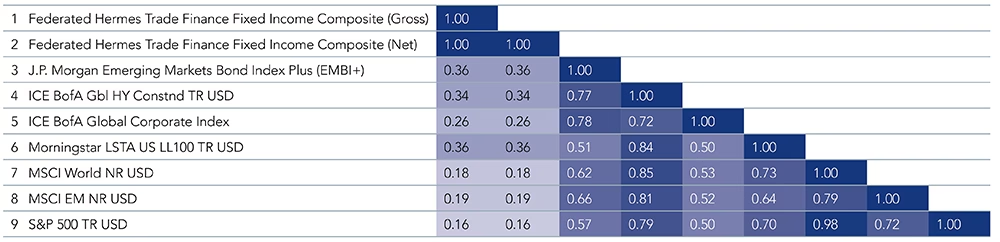
Colour coding shows darker shades as highly correlated to asset class (anything close to 1.0) and lighter shares as more lowly correlated. Past performance is not a reliable indicator of future performance. Source: Morningstar
Floating rate asset class with robust loan structures
In common with leveraged loans, trade finance as an asset class benefits from having little sensitivity to the movement of interest rates – all loans are issued based on a spread over a floating rate (such as SOFR or the ICE BofA US Dollar 1-Month Deposit Offered Rate Constant Maturity Index). However, where trade finance loans differ from leveraged credit is that each transaction within a trade finance portfolio is originated as part of a structure with specific covenants (loans are typically collateralised by the goods being financed), typically avoiding the risks that leveraged loans are most exposed to (such as default risk).
Low volatility and reduced drawdown vs. public fixed income
The short-term nature of trade finance transactions – the average length of a deal is less than 24 months – ensures that the portfolio has lower volatility and a reduced drawdown profile compared to other fixed income asset classes. This is achieved by focusing on two main elements: the structure of the loan and the average life of the loan. A lot of loan structures are self-liquidating.
In our transactions, many loans typically have a built-in ‘floor’ preventing their mark-to-market values being written down as aggressively as can sometimes be evidenced in corporate bonds.
Figure 2: Risk/reward profile relative to traditional market indices
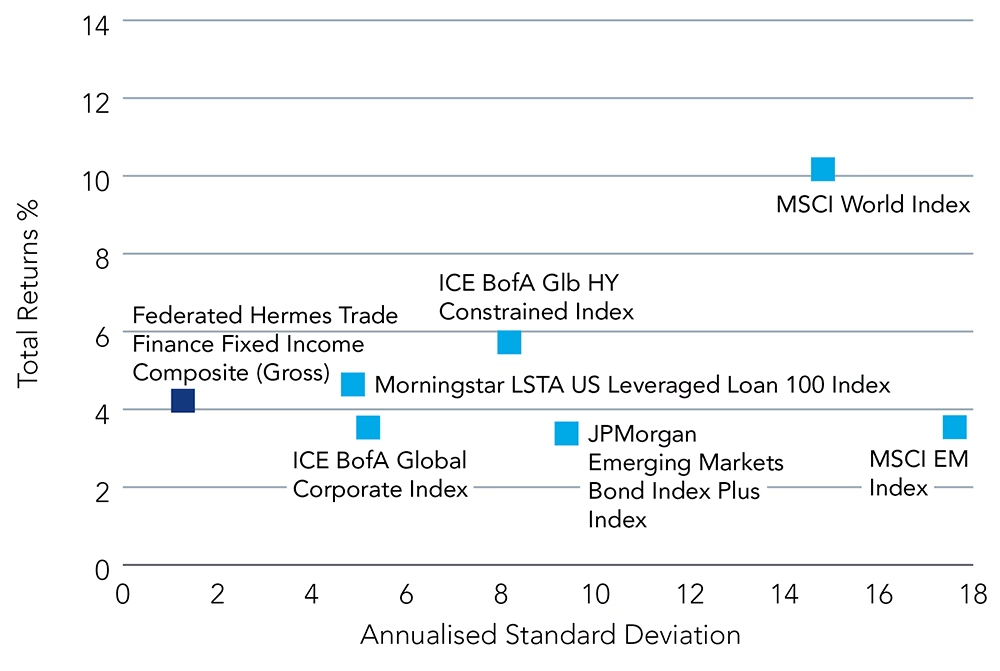
Currency: USD. Past performance is not a reliable indicator of future performance. Source: Morningstar
Why invest in Federated Hermes’ Trade Finance Strategy?
Our trade finance portfolio and investment philosophy focuses on financing essential goods which are material to populations especially in emerging economies where the trade finance gap is most prominent. The strategy enables investors to help reduce this gap, by co-investing in large corporate or financial players alongside leading global banks. It’s also an area that has seen rapid growth in trade volumes in the last few years and has the potential to provide superior deal margins.
Diversification across sectors, regions and loan types
Not all trade finance strategies are created equal. Some trade finance managers typically focus on one segment of the loan market. We strongly believe in the benefits of diversification.
The Federated Hermes’ Trade Finance Strategy invests across a wide spectrum of loan types – ranging from shorter-term self-liquidating structures which enhance the liquidity profile of the portfolio, to more longer-term alpha generating project finance deals – while also utilising our expertise within the reserve-based loan space.
Ultimately, this approach means we can access differentiated alpha sources and have a well-diversified portfolio which enables us to maintain a consistent risk-reward profile in various market conditions.
Long-term relationships with partner banks
Accessing global trade finance markets requires deep relationships with international banks. Federated Hermes has built partnerships with over 50 financial institutions, enabling co-financing of deals ranging from US$500m to US$1.5bn.
In-depth analysis by skilled investment professionals
Each transaction is thoroughly vetted by the investment team, which conducts independent analysis beyond the bank’s assessment. The team reviews over 150 deals annually and maintains strict portfolio risk controls, with each position typically representing 80–90bps of the portfolio.
For more information on the Federated Hermes Trade Finance Strategy, visit its website.
[1] UNCTAD
[2] World Trade Organisation
[3] Global Trade Finance Gap Expands to $2.5 Trillion in 2022 | Asian Development Bank
The value of investments and income from them may go down as well as up, and you may not get back the original amount invested. The views and opinions contained herein are those of the author and may not necessarily represent views expressed or reflected in other communications. This does not constitute a solicitation or offer to any person to buy or sell any related securities or financial instruments.
Issued and approved by Hermes Investment Management Limited (“HIML”) which is authorised and regulated by the Financial Conduct Authority. Registered address: Sixth Floor, 150 Cheapside, London EC2V 6ET.