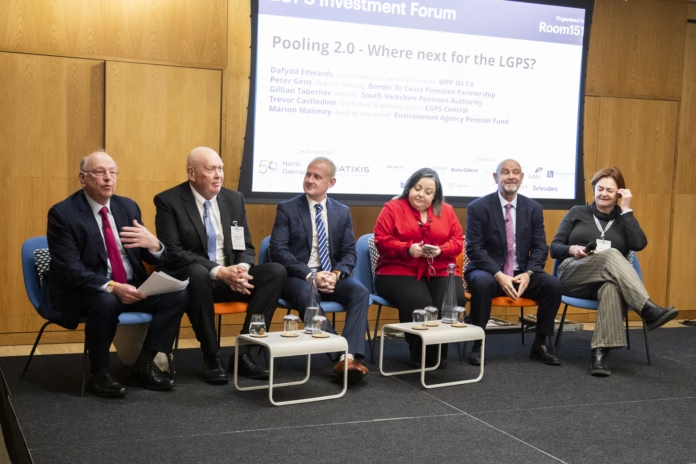
Stuart Hanson, co-founder at MeltX provides an overview of the secondaries market and explores the potential impact of pooling on LGPS participation in the asset class.
What is the secondary market for illiquid funds?
A secondary is the buying and selling of something that’s not new. Whether it’s buying a non-new build property, used clothes or used cars – almost everyone has been involved in a secondary market one way or another.
In the context of illiquid assets, the secondary market is where an existing investor in a private markets fund looks to sell some or all of their exposure to a different investor. This is called an LP-led secondary and is widely used, with over $100bn expected to transact on this market in 2025 alone.
The benefits of an LP-led secondary depend on which side of the transaction you are on:
- For sellers, these transactions allow investors to unlock liquidity from funds they would otherwise have been locked into for years ahead. This can help with portfolio rebalancing and allocating capital to new opportunities
- On the buy-side, these transactions offer investors various benefits, including; access to otherwise closed funds, mitigating the so-called “j-curve” of negative returns in the early years and buying at a discount to the net asset value (NAV)
What’s the potential impact of pooling on LGPS participation in the secondary market?
With LGPS funds in England and Wales having already selected their preferred pooling partners ahead of the March 2026 pooling deadline, there will be an opportunity for the LGPS to be more active in the secondary market as both buyers and sellers.
As LGPS pools grow in assets and resources, there will be an opportunity for them to be more regular buyers of secondary opportunities in the future. In the nearer-term they are likely to be most active in buying funds and managers they already know well, presenting attractive opportunities to top-up exposures. Longer-term, LGPS pools could replicate other large institutional investors, like the often-mentioned Maple 8 in Canada, some of whom have specialist secondaries teams to allow them to take advantage of more secondary opportunities.
On the sell-side, there will be a similar opportunity for LGPS pools to replicate large institutional investors like the Maple 8. These investors treat their private markets exposures in a similar way to their public markets exposures, regularly utilising the secondary market to rebalance and clean-up their portfolios.
In relation to pooling specifically, there will be some illiquid investments that LGPS pools take on from partner funds that aren’t a natural fit for their core portfolio buckets. In most instances these investments will remain “legacy assets” on the partner fund’s balance sheet, under discretionary management of the pool, and run-off through to maturity.
However, these “legacy assets” may be attractive to a variety of other investors, making the secondary market a useful avenue to explore. Potential buyers might include:
- Other LGPS investors
- Corporate defined benefit pension schemes that are running-on
- Defined contribution master trusts
- Secondary fund of funds
Exploring the secondary market here makes sense if the pricing is right. While some funds trade at large discounts, others trade close to or even at a premium to NAV.
Crucially, because LGPS investors are not forced sellers, they can afford to be patient. They can monitor the market and target sales in areas that offer the best pricing at that point in time. Transacting strategically allows the selling pool to reallocate capital into ideas they have more conviction in, which enhances long-term value for members and local communities while increasing the team’s bandwidth to focus on core areas.
How can LGPS investors access the secondary market?
The LP-led secondary market is currently opaque and disaggregated, with deals traditionally going through various advisors instead of a centralised platform. This means buyers have less visibility on the range of opportunities available, while sellers struggle to trust they are getting the best pricing possible.
MeltX was set up in collaboration with key stakeholders in the UK institutional investment market, creating an on-line platform to help make the secondary market more transparent and centralised for buyers and sellers. For LGPS investors, this creates an accessible and low-cost way to buy and sell secondary opportunities directly.
Alternatively, pools can gain indirect access to secondaries through investing in secondaries fund of funds. These funds specialise in evaluating and buying secondary opportunities, creating diversified portfolios that capture the range of benefits highlighted earlier, albeit with a double layer of fees.
Conclusion
Regardless of their chosen access route(s), pooling presents a clear opportunity for the LGPS to become more active in the secondary market. This enhanced participation – capturing opportunities as buyers and unlocking liquidity as sellers – will help realise the full benefits of pooling and add long-term value for Scheme members.
Contact Stuart Hanson, co-founder at MeltX, at [email protected]
For more detail, Stuart’s take on secondaries is also featured in the latest LGPS Podcast on pooling private market assets.

Disclaimer
This Article has been prepared by MeltX, a trading name for Melt Liquidity Limited. Reg. No: 16125803. This Article is intended for use by institutional investors only. You must be a duly authorised representative of an institutional investor to use our services. The content in this Article, including but not limited to text, data, graphics, images, and logos (“Content”), is the property of MeltX or its licensors and is protected by copyright, trademark, and other intellectual property laws. You may not modify, copy, distribute, transmit, display, perform, reproduce, publish, license, create derivative works from, transfer, or sell any Content without our prior written consent. The information in this Document is provided for informational purposes only and does not constitute investment advice or a recommendation to buy or sell any security or investment. You should consult with your own investment advisors before making any investment decisions. The Article and the Content are provided “as is” and without warranties of any kind, express or implied. To the fullest extent permitted by law, MeltX disclaims all warranties, express or implied, including but not limited to warranties of merchantability, fitness for a particular purpose, non-infringement, and security. To the fullest extent permitted by law, MeltX shall not be liable for any damages arising out of or in connection with your use of the Article, including but not limited to direct, indirect, incidental, consequential, punitive, or special damages. Melt Liquidity Limited is an appointed representative of Langham Hall FundManagement LLP, which is authorised and regulated by the Financial Conduct Authority of the UK. The Agent of Melt Liquidity Limited in respect of the placement of any listings on the MeltX Platform in the United States is Marco Polo Securities Inc, a non-affiliated broker-dealer registered with the US Securities and Exchange Commission. The activities of Melt Liquidity Limited in the United States, including the distribution of Indicative Term Sheets, will be effected only to the extent permitted by Rule 15a-6 under the US Securities Exchange Act of 1934 and in accordance with the Services Agreement entered into between Melt Liquidity Limited and Marco Polo Securities Inc with respect thereto. Contact at Marco Polo Securities is [email protected] ; 1-347-745-6448.